UK exports activity: Monthly headlines from AHDB

November 2025's round-up of AHDB's export activity and international market news.

France

Market news

Political and economic snapshot

Political stability and business environment
  • Persistent political uncertainty: France is experiencing significant political instability following the 2024 legislative elections, which resulted in a hung parliament
  • Government fragility: This has led to a series of short-lived minority governments, currently making it difficult for the ruling centrist bloc to pass legislation, especially major reforms
  • Fiscal policy concerns: The political deadlock has slowed down necessary fiscal consolidation efforts, raising concerns about the trajectory of the high public debt-to-GDP ratio (currently over 110%)
  • Business as usual (mostly): Despite the political turmoil, the country's pro-business, reform-minded agenda of recent years remains theoretically in place, but new initiatives face high political hurdles
  • UK-France partnership: A new Industrial Strategy Partnership was launched in 2025, which aims to deepen UK-France economic collaboration in key sectors
Economic outlook
  • Slowing growth: Economic growth is expected to slow down in 2025 (forecast around 0.7% to 0.8%), mainly due to high domestic and global uncertainty and the required government fiscal adjustment
  • Inflation easing: Headline inflation is generally declining, projected to be low in 2025 (around 1.1% to 1.9%), which is supporting household purchasing power
  • Weak domestic demand: Private investment and household consumption have been held back by uncertainty and the lingering effects of high interest rates
  • Labour market: The labour market has been resilient, but the unemployment rate is projected to gradually increase in 2025 and 2026 from its recent lows
  • Strategic focus: The government remains focused on long-term investment in the ecological transition (green technology, decarbonisation) and improving industrial competitiveness

Intermarché buys 294 AUCHAN stores

  • On 25 November it was announced that 294 Auchan supermarkets (in metropolitan France, excluding Corsica) will switch brand to become either Intermarché or Netto
  • Among those 294 stores, 261 were directly operated by Auchan, while 33 were already franchised. The list includes 68 former stores acquired from Casino in 2024
  • These 294 outlets represent a total annual turnover of €3.3 billion
  • Approximately 11,400 employees work in those stores  – they will remain employed by Auchan, despite the brand change
  • Legally, Auchan plans to create a dedicated legal entity to operate these stores as franchises under Intermarché/Netto. The real estate remains owned by Auchan
  • The change covers store name, store concept, supply chain and commercial policy, meaning many former ‘Auchan Supermarché’ will soon be refitted as Intermarché or Netto shops
  • For the group Les Mousquetaires (owner of Intermarché and Netto), the goal is to densify the grocery distribution network, resulting in a closer store spacing (approximately one store every 10 km instead of 17 km), improving accessibility for consumers
  • For the French retail landscape, this marks a major reorganisation: Intermarché/Netto strongly increases its footprint, while Auchan abandons nearly all of its former ‘supermarché’ format

Outbreak of contagious bovine nodular dermatitis confirmed in Savoie and Haute‑Savoie

Authorities have confirmed 47 cases of bovine nodular dermatitis in the Savoie and Haute‑Savoie regions of France, triggering a major animal health emergency. First detected in France on 29 June 2025 in Savoie, the disease affects only cattle (and related bovines) and is transmitted via insect bites.

Because of the high risk of spread, all infected herds are being culled and strict measures have been put in place – including movement bans for bovines and mass vaccination of animals within a 50-km radius around affected farms.

Authorities stress that DNC is not transmissible to humans, and that it does not pose a threat via consumption of meat or dairy products from bovines.

The outbreak underscores the importance of surveillance, rapid detection and biosecurity measures to control the spread of this animal disease.

New wave of bluetongue 3 and 8 cases surge across France

Recent data from the Ministère de l'Agriculture shows a continuing rise in cases of FCO in France. Since 1 June 2025, a total of 6,826 cases of serotype 3 and 3,168 cases of serotype 8 have been reported.

This uptick is fuelled by favourable conditions for the disease’s insect vectors, leading to an increase of 117 new serotype 3 cases and 56 new serotype 8 cases in the past week.

In response, authorities are urging livestock farmers to vaccinate sheep and cattle – especially since available vaccines (for FCO‑8 and newly authorized for FCO‑3) can protect herds not yet infected, reduce viral shedding, and limit disease spread.

Given the scale of the outbreak, this surge represents a serious threat to the country’s ruminant livestock and triggers renewed calls for vigilance, widespread vaccination and strengthened biosecurity measures to manage contagion risk.

Labelled beef and veal: Tradition, trust and changing consumer habits

Meats sold under quality marks (SIQO, e.g. Label Rouge or IGP) – beef and veal especially – continue to hold a place at the heart of French gastronomy, particularly among committed breeders, passionate butchers and high-end restaurants.

  • Every year, a few butchers are rewarded via the Trophée national des Viandes d'Excellence for their strong commitment to valorising SIQO-labelled meats. In 2025, the first prize in the veal category was awarded to a sister duo recognized for their quality offering
  • That said – reflecting broader economic and social pressures – meats under label are under strain: one retailer quotes a drop of about 20% in sales volume over five years for labelled beef/veal, attributing it in part to generational changes. Younger consumers cook less and prefer minced meat over premium cuts
  • Despite that decline, there are encouraging signs of a renewing clientele. Some families and younger consumers seem to ‘discover’ label-meats when they start buying for children, as highlighted by one artisan butcher. That suggests that good quality and transparency can attract new buyers
  • Some retailers try to make label-meat more accessible. One quoted retailer said they offer beef under Label Rouge at a price comparable with conventional meat from competitors, by compressing their own margins in order to “make a difference”. For them, this strategy supports robust sales (in this example, their meat department reportedly does around €5 million per year, in a village of just 3,500 inhabitants).

French sheep sector: Focusing on future generations

Recent news highlights dedicated efforts within the French sheep industry to secure its future through specialised training and support for new entrants.

  • INN’OVIN installation days: Mid-November saw two successful INN’OVIN days in Haute-Garonne and Eure, aimed at students and individuals planning to launch sheep farming businesses
  • Connecting new farmers: The core goal was to connect aspiring farmers with the entire value chain and provide the keys to building a coherent and sustainable project
  • Industry support: Around 20 key stakeholders – including public services, agricultural banks, regional chambers of agriculture, health services (GDS), and selection bodies – took part, presenting their roles and detailing the crucial steps of the installation process
  • Land access solutions: Initiatives to ease land access were highlighted, notably the Occitanie Agricultural Land Agency (Foncière Agricole d’Occitanie), which buys land and rents it temporarily to young farmers
  • The coherence key: Industry experts stressed the necessity of developing a project that is "coherent with the rest" of the farm, particularly in regions where sheep are often a complementary workshop to cattle or cereal production
  • Outlook: These initiatives underscore the French industry's commitment to reducing uncertainty for new entrants and ensuring the long-term viability of the national sheep sector

France to allow wolf‑defence shooting on simple declaration for sheep and goats

A draft decree put into consultation on 27 November changes the rules for defending flocks against wolf attacks. From 2026, owners of sheep and goat herds in high‑predation zones (zones 0, 1, and 2) will be allowed to conduct lethal “defence” shootings on simple declaration –  without the prior prefectural authorisation previously required.

The reform does not yet apply to cattle and horse farms. Those remain under the individual authorisation regime defined by the relevant agricultural law, though harmonisation with the new rules is announced as an eventual goal.

The draft also confirms that the annual quota for wolf killings remains capped – no more than 19% (+ 2%) of the estimated total wolf population for 2026 – meaning the new declarative regime does not bypass population management limits.

These changes reflect the significant pressure French sheep farms face from natural predators. Wolves, golden eagles and other predators create higher risks for ovine herds in France compared with the UK, where predation is far less intense, increasing the challenge for French livestock producers in maintaining flock health and productivity.

AHDB activities


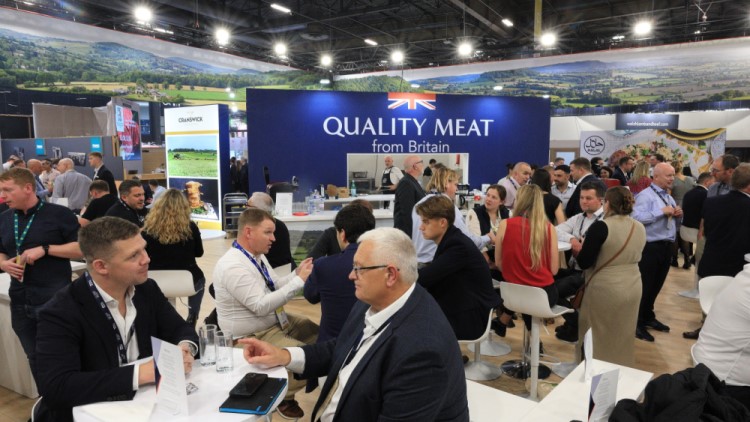
AHDB, in partnership with Macquet, delivered strong visibility across the recent series of Métro premium events.

Métro is one of France’s largest cash-and-carry wholesalers, supplying restaurants, caterers, and food-service professionals nationwide. With 99 stores across the country, it is a key decision-making hub for chefs, buyers and premium hospitality operators.

At the Vitry Premium Evening alone, around 100 high-value customers attended, including Michelin-starred chefs and premium brasseries. With a prime location and as the only lamb and meat producer present, the Macquet/Quality Lamb from Britain stand became one of the first and most frequently visited. Feedback from customers was extremely positive, and the Vitry Hall – already a major client with over 35 tonnes of British lamb purchased annually – reinforced its confidence in our product.

These events, six in total across key Métro sites, are proving highly impactful touchpoints with decision-makers, buyers, and food-service influencers, and significantly strengthen the visibility and positioning of British lamb within the French market.

Germany

Market news

Animal welfare: Supermarkets no longer want to sell meat from husbandry standard 1

From the end of 2025, Lidl, Aldi Süd, Rewe and Penny will no longer sell meat from the lowest animal welfare standards. Consumer advocates welcome the decision but call for greater price transparency.

By the end of 2025, supermarkets are also set to phase out cheap meat. From then on, only meat from animal welfare level 2 will be available in the refrigerated sections. Lidl, for example, says it has already achieved this goal for most products.

In response to an inquiry from the TV program MDR AKTUELL, Lidl stated: "Our customers demand animal welfare standards that exceed the legal minimum and are asking for products from higher welfare levels."

Furthermore, the company believes it is its responsibility to offer fresh meat from at least welfare level 2. Therefore, it has also agreed within the industry alliance "Animal Welfare Initiative" to establish welfare level 2 as the minimum standard.

Aldi Süd will also stop offering its own-brand fresh meat from animal welfare standard 1 from mid-January. Rewe and Penny also plan to ban the cheap meat by then.

Aldi, Edeka, Lidl and Rewe too powerful - with expensive consequences for consumers

A new report shows Edeka, Rewe, Aldi and Lidl dominate the food market and weaken competition and agriculture, with experts warning of further increase in power.

Edeka, Rewe, Aldi and Lidl have become too powerful – this is what the Monopoly Commission says in its current special opinion. After years of mergers, the four trading groups now control around 85% of the food retail.

Tomaso Duso, Chairman of the Monopoly Commission: “The concentration of food retailing is already very advanced. This makes it all the more important to secure the remaining competition, because the four largest players are expected to continue to dominate the market.”

A central accelerator of this development was the controversial ministerial permit for the takeover of Kaiser’s Tengelmann by Edeka in 2016. The report states that the decision “significantly harmed competition in the food trade”.

The Monopoly Commission is also seeing an increasing concentration at the manufacturer level. The market power of the major players is not a theoretical danger: The empirical analyses in the expert opinion clearly show that the concentration in the German retail and among manufacturers leads to competition problems.

In comparison, consumer prices for food in Germany have risen the most since 2011. The narrative of the “discount country” is thus invalidated. A central pattern becomes visible: price increases are passed on quickly, while price reductions are hardly passed on.

This is particularly evident in dairy and meat products: trade prices rose significantly more than producer prices – and remained high, even when producer prices fell again. In parallel, profit margins have been rising in trade and manufacturers for over 10 years, while consumers and especially farmers hardly benefit.

A central finding of the expert opinion is the food trade is increasingly approaching production. Above all, the Schwarz Group (Lidl, Kaufland) operates a massive vertical integration, as does Edeka.

For the Monopoly Commission, this development is highly problematic. The further the trade penetrates into production, the greater its bargaining power towards manufacturers and farmers. The concentration on the trade side leads to concentration on the part of the manufacturers, which in turn results in a further concentration on the part of the trade.

This mutual process of concentration is called the “spiral effect” and cannot make sense, since it would ultimately lead to the collapse of the competition.

That is why Duso explains: “The concentration process of food retailing must not continue at the manufacturer level.”

According to the expert opinion, five areas of food production are considered to be particularly critical: milk, meat, cereals, sugar and potato products.

For dairy products, trading prices are rising faster than producer prices – especially among the largest six players (DMK, Müller, Hochland, Hochwald, Arla, Fude). Price cuts barely reach consumers. At the same time, trade is increasingly influencing the processing structures.

However, Duso warns: “The structures that have established themselves in the meat supply chain should not be repeated in the dairy industry. A restriction of further concentration at the manufacturer’s level is a central starting point to prevent this.”

In the meat industry, few large companies determine the market – above all the Premium Food Group (formerly Tönnies Holding) and Westfleisch. In addition, the trade has its own slaughterhouses and processing companies, so that independent structures hardly exist.

Lidl marks certain items with yellow stickers – here's why

For days now, customers have been finding yellow stickers on products in the aisles and freezers: "Secured item – remove label before heating."

These stickers also include a padlock symbol. They are not only appearing on coffee brands like Nescafé and Dallmayr Prodomo (which is common practice in many discount stores and supermarkets), but also in the refrigerated sections.

The anti-theft sticker is affixed to packaging containing beef fillet, entrecôte, and even beef goulash (400 grams for €7.99). The yellow sticker is also prominently displayed on the Norwegian salmon fillet.

Shoplifting is a growing problem in Germany. Self-checkout lanes are particularly affected by theft. Between 2022 and 2024, the losses incurred by retailers due to shoplifting increased by 20% to €3 billion. As a result, more and more products are being electronically protected against theft with stickers.

An investigation by the EHI Retail Institute also proves the increasing number of shoplifting in Germany. There is a high number of unreported cases because far from every theft is reported or even detected.

The Cologne-based EHI Retail Institute even estimates 100,000 shoplifting incidents go undetected every day. EHI expert Frank Horst explained that “more and more often, seniors and families” are among the perpetrators. The reason for this is the poor economic situation, which leads to many people no longer being able or want to afford certain products.

How the labels work

The yellow stickers are so-called RF labels. The abbreviation stands for radio frequency – they contain a metal coil that is deactivated by a high voltage when the item passes through the checkout. If this doesn't happen, an alarm is triggered when the item passes through the security gate.

Government advisors are calling for higher meat prices.

Germany's leading scientific academy, the Leopoldina, based in Halle (Saxony-Anhalt), is calling for a significant price increase for meat, milk, sausage, and butter.

The researchers propose raising the value-added tax (VAT) on animal products from 7-19%. The scientists, who also advise the German government, argue that the production of animal products such as beef, pork and poultry consumes too much land, causes high greenhouse gas emissions and thus harms the climate and biodiversity.

The largest pork slaughterhouse in the state of Brandenburg is likely facing closure

In Perleberg, Brandenburg, the Perleberg meat centre, the largest slaughterhouse in the state, is threatened with closure.

The Perleberg meat processing plant cites, for example, extended delivery restrictions, such as those for exports to China, as well as global tariff restrictions. African swine fever and foot-and-mouth disease have also had consequences for the business, as well as the high energy, logistics and labour costs which are problematic for the entire economy.

Inflation slowed

After falling below the overall inflation rate for the first time since January 2025 in September, food prices in Germany continued to strengthen in October.

According to the Federal Statistical Office (Destatis), while the overall inflation rate was 2.3%, food prices were only 1.3% higher than in the same month of the previous year. This represents a significant slowdown in food price increases; in September 2025, the rate of change was still at 2.1%.

The last time food prices were even lower was in January 2025, at 0.8%. Among food items, edible fats and oils were particularly cheaper in October; olive oil was 12.6% cheaper than a year earlier, olive oil 22.7% and butter 16.0%. Consumers also paid around 4.0% less for vegetables. Potatoes were even 12.6% cheaper compared to the same month last year.

However, according to Destatis, several other food items also became noticeably more expensive than a year earlier, particularly sugar, jam, honey and other confectionery; these products saw a price increase of 8.2%. Chocolate even rose by 21.8%.

Consumers also had to dig deeper into their pockets for meat and meat products, with prices rising by 4.3%. Fruit cost 3.1% more than in the same month of the previous year. According to Destatis, the overall inflation rate declined slightly in October after two consecutive increases.

The continued above-average price increases for services were a contributing factor to inflation. In contrast, energy product prices were 0.9% lower in October 2025 than in the same month of the previous year. While natural gas, firewood and wood pellets became more expensive in the energy sector, fuels, conversely, became cheaper.

Pork

South Korea is importing German pork again

South Korea, an important export market, is once again open to pork and pork products from Germany. The Republic of Korea lifted its import ban on 23 October, imposed due to foot-and-mouth disease (FMD).

This followed intensive discussions between the German Federal Ministry of Food and Agriculture (BMEL) and the Korean Ministry of Agriculture, Food and Rural Affairs.

Following the outbreak of FMD in Germany in January 2025, the Republic of Korea – like numerous other countries – banned the import of pork and pork products from Germany.

Trade in fresh pork, which had only just resumed after the regionalisation of African swine fever (ASF) control measures, subsequently came to a standstill. South Korea is one of the most important third-country markets outside of Europe for the export of pork and pork products; in 2024, before the FMD-related ban, approximately 51,000 tonnes were exported.

German imports of pigs have decreased significantly

Germany is buying significantly fewer pigs from abroad. From January to September, imports fell by 10%. The Netherlands is drastically reducing its deliveries.

Stable slaughter pig prices continue

The supply of slaughter pigs is currently plentiful, yet the market continues to stabilise. While there are still some reports of surpluses and sluggish business, most of the available animals are being sold.

Initial positive developments in the meat market are having a stimulating effect, with slaughterhouses quickly responding to demand. The recommended retail price remains at €1.70/kg carcase weight.

The pork trade continues to be described as brisk. Production and processing are gradually increasing in anticipation of Christmas. Demand is rising for both consumer and processing meat.

The quantities offered are generally selling without difficulty. Necks can sometimes be purchased at slightly lower prices, although interest in some cuts is not quite as high.

Otherwise, prices have remained largely unchanged compared to previous weeks. There are currently no shortages of specific cuts.

Beef

Ban on beef exports to Japan lifted

Germany can once again export fresh beef to Japan. The Japanese Ministry of Agriculture, Forestry and Fisheries (MAFF) announced on November 12, 2025, that it was lifting the import ban imposed in January 2025.

The 10-month ban was triggered by a case of foot-and-mouth disease (FMD) in Brandenburg, Germany. The Japanese market is particularly important for German exporters due to the demand for high-priced beef offal.

The reopening of the Japanese market also has a positive impact on the German dairy industry: With Germany's recognition as FMD-free, the export of untreated dairy products, such as raw milk cheese, is now possible again.

Lamb

Marketing of slaughter-ready lambs is difficult

Marketing lambs ready for slaughter continues to pose significant challenges for sheep farmers.

On the one hand, quantities remain substantial, while the meat market is currently lacking in momentum. On the other hand, domestic products are quite expensive compared to imports, which is why slaughterhouses and processors often resort to imported cuts.

Although preparations for the Christmas season are slowly getting underway, waiting times of up to two weeks for the delivery of animals ready for slaughter are currently not uncommon. The national German average prices for lamb varies from €3.50-3.70  per kg of live weight class 1 (including VAT).

Lamb prices

Supermarket

No. of stores

Date

Article

Price €/kg

(incl. VAT)

Origin

Lidl

3,250

24.11.

lamb leg (bone in)

12.99

AUS

REWE

3,800

24.11.

French racks

55.00

IR

REWE

3.800

24.11.

Lamb loins

49.90

NZ

Selgros

36

24.11.

Lamb chumps (marinated, deboned)

23.43

NZ

Selgros

36

24.11.

Lam hind shanks

20.32

IR

Metro

16

24.11.

Lamb neck

20.99

IR

Metro

16

24.11.

French rack

28.34

NZ

Hepsi Markt

3

24.11.

Whole Kurban lamb 20 kg

400

UK

Hepsi Markt

3

24.11.

Lamb leg (bone in)

13.99

UK

Hepsi Markt

3

24.11.

Lamb shoulder (bone in)

12.99

UK

Beef prices

Supermarket

No. of stores

Date

Article

Price €/kg

(incl. VAT)

Origin

Lidl

3,250

24.11.

Beef goulash

14.49

DE

Kaufland

780

24.11.

Beef goulash

12.98

DE

EDEKA

3,200

24.11.

Beef roulades

19.99

DE

EDEKA

3,200

24.11.

Rump steak

39.90

US

Metro

36

24.11.

Roast beef

23.53

DE

Metro

16

24.11.

Entrecote (2,5 kg)

26.74

ARG

Metro

16

24.11.

Roast beef

25.67

ARG

Hepsi Markt

3

24.11.

Roast beef (young bull)

21.99

PL

AHDB activities

Seminars in German meat schools


English premium lamb was professionally butchered and tasted during a full-day master butcher course at the Frankfurt butcher and baker technical school Heyne.

The Heyne Butcher School has been the top destination for master butchers in the Frankfurt area for over 70 years. The seminars gave German butchers important information about English lamb, such as breeding, husbandry, slaughter, quality and import options.


The Netherlands

Beef and lamb news

Non-profit organisation ALLEBEI raises awareness about male animals

The livestock industry often pays little attention to male animals, resulting in them being slaughtered, culled or exported at an early age. This is mainly because many people believe that males have no economic value, despite the fact that they can be useful for meat production. The Dutch non-profit organisation ALLEBEI aims to change this by raising awareness of the value of male animals and how they are treated.

On 19 November, ALLEBEI launched the ‘This Man Matters’ campaign. Through this campaign, it aims to demonstrate that male animals are not unnecessary and can lead full, dignified lives. It highlighted that organic farming makes use of dual-purpose animals such as Jersey cows, which produce milk and meat. This ensures that male animals also have a good quality of life.

At a tasting event held at Odin Arnhem and through street interviews, many consumers were unaware of how male animals are often treated during milk and egg production. On the day, dishes featuring male steer and rooster meat were served. Feedback indicated that, for many, the taste of this meat was not the main obstacle to eating it, with the focus being more on raising awareness and breaking taboos.

The campaign was launched on National Men's Day, which ALLEBEI said was a deliberate choice because it represented the value of men, including in agriculture.

Poppe Braam, ALLEBEI's director, emphasised that male animals in the organic sector also deserve fair and respectful treatment. The campaign aims to show consumers, chefs and buyers that it is possible to eat in a way that is both honest and fulfilling, telling the full story behind the product and choosing solutions that are not just the most common, but also the most animal-friendly.

Highly fluctuating prices for meat

Supermarket prices are becoming unpredictable, especially for meat, due to highly fluctuating raw material prices.

According to Cees-Jan Adema of the Federation of the Dutch Food Industry (FNLI), consumers will need to get used to greater price fluctuations caused by factors such as climate change, geopolitical tensions and logistical challenges.

International markets primarily influence the cost of products such as coffee, cocoa, grains, dairy and meat. For meat, particularly beef, national developments such as the ongoing debate about nitrogen emissions and the buyout plan for farmers are having a significant impact, resulting in a reduced supply and the potential for sharp price increases.

The FNLI emphasises that the market is becoming more dynamic and that all links in the chain must collaborate to ensure affordability without compromising the interests of farmers and producers.

Beef significantly more expensive

The price of beef, including steaks, burgers and minced beef, has increased considerably in recent years. Over the past year, prices were around 38% higher, and over a five-year period, prices have increased by almost 125%.

This price rise is driven by a decrease in supply, partly due to the closure of more farms in the Netherlands as a result of stricter nitrogen regulations and buy-out schemes. This has made beef less available, further pushing prices upwards.

At the same time, demand for meat remains strong, which is causing market prices to continue rising. Market research by DCA Market Intelligence indicates that wholesale prices for slaughter cattle have increased sharply due to this combination of demand and supply constraints, particularly as the cost of animal feed is rising faster than that of plant-based products.

This makes meat and dairy products, such as butter and cream, more expensive, and it is expected that meat prices will continue to rise in the future.

As consumers increasingly opt for cheaper pork or chicken, Marian Lemsom (CEO of Royal Dutch Butchers (KNS). predicts that the price of these meats will also rise.

People are adjusting their eating habits by, for example, buying less meat, choosing smaller portions or mixed products, or eating more healthily. This shift in demand could put further pressure on meat prices.

The Dutch meat sector, represented by organisations such as the Central Organisation for the Meat Sector (COV), claims that the Netherlands is a world leader in food safety, sustainability and animal welfare.

It argues that importing meat from abroad is not the solution, as it is often lower quality and has a larger carbon footprint. Furthermore, animal welfare standards in the Netherlands are considered to be very high, and maintaining Dutch livestock farming is seen as key to upholding these standards.

In summary, a combination of regulations, declining number of farms, steady demand and international trends are expected to cause further increases in beef prices in the Netherlands, with possible consequences for consumption and the market position of Dutch meat.

The fast growth of hybrid meat

The rise of hybrid meat products, made from both meat and plant-based ingredients such as vegetables and legumes, is increasing in supermarkets.

Large chains like Dutch supermarkets Jumbo and Lidl already offer a significant range of hybrid products. For example, at Jumbo, 65% of burgers and sausages are hybrid, and at Lidl, that share is also around one-third.

According to meat suppliers Van Loon, the share of hybrid meat in sales is expected to grow from 3% now to 7.5% in 2027. The driving forces behind this development are ambitions related to sustainability and the protein transition, with supermarkets aiming to make approximately 50% of the protein products sold plant-based by 2023.

Hybrid products are viewed as a way to accelerate the shift towards more plant-based consumption without deterring meat lovers.

Supermarkets often combine fresh meat with plant-based ingredients such as Dutch field beans because this approach is not only more sustainable and healthier but can also taste more appealing.

The packaging does not always explicitly emphasize that the product is partially plant-based, to avoid discouraging consumers. Transparency is primarily provided through the ingredients list.

This strategy helps meat-eaters become accustomed to plant-based additions in their familiar meat products without feeling like they are fully switching to vegetarian or vegan options.

The term 'hybrid' is not always prominently used because words like vegan, vegetarian, or meat-free can sometimes be intimidating or hinder sales. Research shows that terms like 'lower fat' or 'healthy' on packaging tend to be more effective.

For example, Albert Heijn highlights that its hybrid yogurt is rich in protein and calcium, and its meat products contain less fat, communicating benefits without emphasising the hybrid nature. ProVeg recommends making it clear that hybrid products are a mixture – perhaps through subtle labels or similar packaging – rather than through conspicuous, separate containers.

Consumers are generally open to more plant-based foods, but changes in purchasing behaviour often happen slowly because people are hesitant to fully replace traditional meat products. They sometimes find it difficult to assess the taste and quality of hybrid products and do not quickly change their habits.

Nonetheless, producers and butchers see hybrid products as a good way to enrich meat with fibres and reduce saturated fats, making them healthier and potentially tastier.

Price also plays a crucial role. Hybrid products are often offered at the same price or cheaper than full meat products, making the transition more attractive for consumers. Chains like Jumbo, Albert Heijn, and Lidl aim for plant-based variants not to be more expensive than meat products, to lower the barrier for consumption and promote the protein transition.

This approach has proven successful in the Netherlands. According to ProVeg, Dutch retailers are leading Europe in the development of hybrid meat products and plant-based protein alternatives.

The trend remains relatively discreet, but internationally, it is not yet observed on the same scale everywhere. Hybrid meat products are recognized as an important step in reducing animal suffering, climate impact, and improving public health.

Meat consumption is slightly decreasing

The researchers from Wageningen Social and Economic Research (WUR), commissioned by Animal Welfare Organisation Wakker Dier, are keeping track of meat consumption figures. In 2024, Dutch consumer consumed 74.4 kg  of meat and this has dropped below the 75 kg for the first time since meat consumption started being monitored.

Compared to 2009, meat consumption has decreased by approximately 6%, representing a modest decline.

The researchers describe this as a ‘slightly downward trend’ and note that the meat industry is facing increasing difficulties. The decline has not always been gradual: earlier reports recorded a brief increase, but this was only a temporary trend break.         

Prices

Store

No of stores

Date

Days

Piece

Origin

Price per kg

Plus

560

1-nov

30

Rumpsteak

FR

€34.67

Plus

560

1-nov

30

Ribeye

FR

€39.90

Plus

560

1-nov

30

Entrecote

FR

€39.90

Jumbo

723

1-nov

30

Rumpsteak

IRL

€33.75

Jumbo

723

1-nov

30

Ribeye

NL

€47.95

Jumbo

723

1-nov

30

Entrecote

NL

€43.30

News from other markets

Market promotions

Sonae/Continente

The focus for beef has been on Angus with striploin steak at €18.99/ g and brisket at €13.99 on the Butchery corner. For pre-packed, maminha (rump tip) and fraldinha (thick skirt) from South America were highlighted.

For lamb, the leaflet only focused on frozen shoulder from New Zealand at €8.99/kg.

We’ve launched the Posh vacuum-packed range of lamb cuts from the UK made by Kepak, but they were not included in the promotional leaflet. Prices were Carré at €29.99/kg, rolled boneless shoulder at €20.99/kg and rolled breast at €16.99/kg (see below).

Jerónimo Martins/Pingo Doce

At Pingo Doce the focus was on cuts for stewing, priced at €10.99/kg.

There were no lamb promotions. Because there is the feeling that the amounts available of light lambs will be low and it is key to show them before and during Christmas, we believe Pingo Doce is protecting the committed supply to run next month. That means leaving the animals on the field to be slaughtered later.

AHDB activities

Carne magazine

As a result of bringing Manolo Oliveira to the AHDB’s September Mission, he featured a major article in the magazine including the cover, editorial and 20 pages praising UK farmers for the care taken in farming, their pastures, the checks and controls, the variety of the breeds and the unique conditions to raise top quality lambs.

This is a major achievement in terms of bringing the focus into the British lamb to the professional meat sector in Portugal.

Launch of Posh vacuum-packed lamb cuts


On the 14 and 15 November we launched the vacuum-packed Posh lamb cuts (carré, rolled boneless shoulder and rolled breast) from Kepak at the Continente Oeiras. 

The event was hosted by our chef Pedro Sommer with the products supplied by NIPA. Cuts were cooked to a large audience of consumers eager for a taste.

Tailored recipes, developed by Pedro Sommer and AHDB Portugal, are featured on an attractive flyer which will be placed next to the products in each of the 40 Continente shops selling them. We will host more cooking demos at 10 to 15 of Continente’s bigger stores throughout the year.

Despite the relatively high prices per portion, the demos have ended with empty shelves, demonstrating the potential success of this range to shape the future consumption of such products throughout the year and not during the festive season only.

AHDB activity

CIIE & FHC, Shanghai


AHDB showcased British pork and cheese at two major trade shows, attracting strong interest and long queues at the joint stand at FHC with the dairy sector.

Pork promotion, Shanghai

In partnership with PMI, we hosted a pork event for 40-plus foodservice professionals, featuring British pork cuts and live dish sampling.

Japan chef showcase

A restaurant promotion event in Japan with Toranomon Hills,  the British Beef & Lamb Fair generated 41 media clippings, reaching over 130 million impressions and a media value of £99,000, reflecting strong consumer and trade media interest in British meat.

Beef promotion, Hong Kong

A retail campaign with ABP and a local distributor is running in 14 Yata stores, boosting British beef’s profile in the market.

Opportunities for UK beef and pork exports

As part of AHDB’s exports strategy, an outward trade mission was organised to explore opportunities for UK beef and pork exporters in the Philippines. Visits took place in Manila with key beef and pork importing companies.

The leading meat products consumed in the Philippines are chicken and pork based. Beef is generally considered a luxury in the Philippines due to high prices relative to income.

However, demand for beef is gradually increasing, particularly as restaurants increase their dine-in capacity and the tourism sector begins to improve.

The Philippines is the second-largest destination outside of the EU markets for UK pork exports, and as such is a valued and key market for the UK.

There were visits to wet markets, large suppliers of frozen meats and commercial cold stores, which provided valuable insight to see what products were coming in, and to large meat processing plants to see the techniques used in different markets and gain a much better understanding of the raw materials being used.

Viewing the different cuts, how they are packaged, how they are distributed and to who also provided a greater understanding of how the industry operates.

The suppliers of frozen meats and meat processing plants mainly cater to modern trade businesses such as retail chains, supermarkets, hypermarkets and large-format stores, as well as catering to hotel, restaurant and other foodservice businesses.

Hypermarkets and supermarkets are the leading distribution channels in the Filipino meat sector, with a value share of approximately 50% (Source: Global Data Philippines, via the British Chamber of Commerce Philippines).

Commodity beef and pork is highly valuable to both the Philippines and UK producers, for product that would reach consumers via wet markets, or be used as ingredients on further manufacture, beef products being used for processing and reaching Filipino consumers.

The three-day visit to the Philippines culminated in a networking reception which was attended by approximately 90 delegates from the entire meat supply chain.

B2B meetings also took place between meat importers and UK meat exporters prior to the reception.

Opportunities for UK meat exports

As part of AHDB’s exports strategy, an outward trade mission was organised to explore opportunities for UK red meat exporters in Sub-Saharan Africa. Meetings took place in Dakar and Accra with key red meat importing companies.

The current supply of red meat from local production in Ghana covers less than half of domestic demand and as such, it relies heavily on imports.

Total red meat imports into Ghana in 2024 were approximately 60,000 tonnes. (source: Trade Data Monitor LLC).  Senegal is mainly a Muslim country so halal food is very important, however, there is no strict import regulation on halal certification.

Local production produces sufficient sheep meat, so sheep meat is rarely imported or almost non-existent. Pork is also not high in demand for religious reasons.

Beef is the most widely consumed red meat product in Senegal while chicken is the most eaten in Ghana.

While sheep meat is not as popular in Senegal as it is more expensive, it is the second-most widely consumed meat in Ghana after chicken.

Meat per capita consumption in Senegal as of 2021 was 18.5 kg with beef accounting for 5.4 kg of this. Meat per capita consumption in Ghana as of 2021 was 14.4 kg with beef accounting for 1.5kg of this. (source: World Population Review)

Both the Senegalese and Ghanaian governments intend on introducing policies (with high tariffs) aimed at reducing meat importation with a view to supporting local farmers and increasing local meat production.

There are currently no import quotas for animal products but a tariff rate of 35% on imports of meat products and frozen raw meat applies in both Senegal and Ghana.

Imports of premium products such as chilled bovine meat is imported in small quantities to meet the needs of hotels and restaurants and the middle to upper classes.

This is in contrast to commodity products such as frozen offal, an affordable source of protein, which are imported in large quantities to feed the growing lower income population.

Senegal

Beef liver and buffalo meat are reported to be the most consumed type of meat, followed by sheep meat.  It is a highly price sensitive market.

Although protein content of frozen offal is low compared to other meat cuts, it is nevertheless considered to be a valuable and affordable source of protein among the low-income population.

Commodity products currently account for at least 90% of imports with premium products accounting for approximately 10%.

There are three main importers in Senegal who between them control more than 50% of the Senegalese market.

Imports of beef liver products are largely sourced from Europe, namely Ireland and UK. Beef kidney and tripe are also reported to enter the Senegalese market albeit in smaller quantities. India also has a strong presence in the market and supplies Senegal with buffalo meat.  

Lamb offal is consumed in modest quantities as it is more expensive than beef offal. Popular products include lamb rack, shoulder, breast bones and neck bones.  Australia is currently the dominant supplier of lamb.

Importers are looking to import modest quantities of premium beef or lamb cuts to supply the foodservice sector.  A mixed container of beef offal and premium beef and lamb cuts is desired in order to reduce freight costs.

Importers have also indicated that the UK has two main advantages over India, Senegal’s other main supplier – superior quality of UK meat and a much shorter delivery time of 4-5 weeks compared to India’s 8-10 weeks.

However, with price being India’s main advantage over the UK and with Senegal being a highly price-sensitive market, the reality is that Senegalese importers will continue to seek origins that offer more favourable prices.

The delegation had several meetings in Dakar on 3 November.

Ghana

Meat consumption in Ghana varies along geographical and religious lines. While the population in the south of Ghana consumes more imported meat products, the people of northern Ghana tend to consume meat from domestic production, given that livestock is largely raised in the north of the country.

Chicken is currently the most consumed meat at the national level, followed by sheep meat and pork.

Beef green tripe, sinews, mask, burnt feet, and liver are reported to be the most popular imported products with gullets and beef ears following suit. Consumers prefer for burnt (brown) beef feet as opposed to white feet, and as such, must be dehaired upon arrival.

Beef sinews are in high demand as they are widely consumed as a stew, soup or for roasting on a kebab. They should contain less fat. Beef mask must contain some meat on it so it can be used for stews and soups. Gullets must contain sufficient blood in order to redden the meat. This is because they are used to mix with beef sinew.

Imports of frozen beef offal products are largely sourced from Europe, namely Ireland, the UK, the Netherlands and Poland.  Sinews from the UK and Ireland are widely reported to be excellent given they contain less fat with a deep red colour. Gullets from the UK, however, are not as popular as they do not contain enough blood. Brazil also supplies much of the beef lip meat as well as sinews, heart, tripe and gullet given that it is able to supply in larger volumes at a cheaper price. 

Very little pork is consumed in the north of the country given that the majority of the population is Muslim. Brazil and Argentina are major suppliers of pork hind feet followed by half heads and mask. It was widely reported that pork imports have decreased in recent years due to a decline in consumption.

Feedback from importers indicated that high volume cheap chicken breast imports from China, considered inferior in China but a premium product in Ghana, may be the reason for this shift in consumption.

Sheepmeat, by contrast, has a higher per capita consumption in Ghana at 1.9 kg.  However, sheep meat imports are still modest compared to beef imports due to price.

Lamb breastbone is the most widely consumed in Ghana followed by lamb rib bones and lamb chops.  Neck bone, ribs and green tripe are also popular cuts and are largely sourced from Australia.

South America is also an important supplier to the market, in particular, green tripe which is in high demand among the Muslim population for barbecues.    

Meat is currently being commercialised in Senegal and Ghana by:

  • Wholesalers: Large warehouses present around the country displaying a wide range of offal products where mainly housewives arrive to carry out their purchases
  • Importers who operate their own distribution outlets and sell directly to customers
  • Local markets: Customers buy in bulk (200-300 boxes) in order to resell again to consumers in certain small localities or street markets

Competition among the many major meat importers is fierce in Ghana. Some are seeking to differentiate themselves from their competitors by adding value to their services by operating a widespread distribution network.

They have branches in various towns around the country with a commitment to bringing frozen offal products closer to customers.

Others operate via the use of refrigerated vans that target markets in remote villages, allowing customers in rural areas access to meat without the need to travel.

Importers are also striving to differentiate themselves from their many competitors in the meat market by placing more emphasis on the importance of brands and visual presentation.

Appealing and presentable packaging of neck bones and feet from Europe with a view to creating a value-added product is becoming increasingly popular among the more ambitious importers – all targeting high end hotels and restaurants.

Others are looking to operate in direct retail distribution to hotels and restaurants by importing premium beef cuts such as tenderloins, rib-eyes and sirloins as a means to differentiate themselves.

Frozen beef offal is a key export product to Senegal and Ghana and UK frozen offal products feature strongly in both markets.

However, there is potential for the UK to increase the amount of commodity cuts of red meat – in particular, beef exports to Ghana.

In contrast to Senegal which is a highly price-sensitive market beef offal from the UK has a very good reputation in Ghana for being very good quality compared to other origins such as India or Brazil, and as such, feedback from importers indicated that quality overrides price.

Some importers in Ghana have expressed an interest in receiving mixed containers of both frozen offal and premium products from the UK and are keen to diversity their distribution base and receive samples of different offal cuts and premium cuts.

Continuous engagement with companies responsible for frozen offal meat imports as well as maintaining contact with the few that import higher value products is key to ensuring that future opportunities for UK meat and offal exports to Senegal and Ghana remain open. 

The delegation had the opportunity to meet some of the main importers in Accra and Tema from 5 to 7 November.

Export news from around the world

×