How will food inflation affect meat and dairy demand in 2026?

Monday, 22 June 2026

UK food prices have risen 39% since 2020, peaking in 20231. While food inflation has eased since this peak, new global pressures point to another period of volatility in late 2026. This is likely to affect shopper behaviour and demand across meat and dairy.

Key takeaways

  • The Middle East conflict and possible global weather disruption could push food inflation higher towards the end of 2026
  • Inflation will vary by category, with beef inflation currently easing and some dairy prices in decline, creating mixed demand signals
  • Cost-of-living concerns have returned to their highest level in the past two years. This will impact shopper mindsets before inflation hits household budgets
  • Consumers will focus on cheaper products for everyday use and keep expensive products for special occasions or small treats

Inflation pressures are building again

Increases in food prices since 2020 have been driven by a combination of global energy market volatility, rising agricultural commodities, tighter regulations such as the Plastic Packaging Tax, higher labour costs, including increases in the National Living Wage, and other factors such as climate shocks and currency exchange rates1.

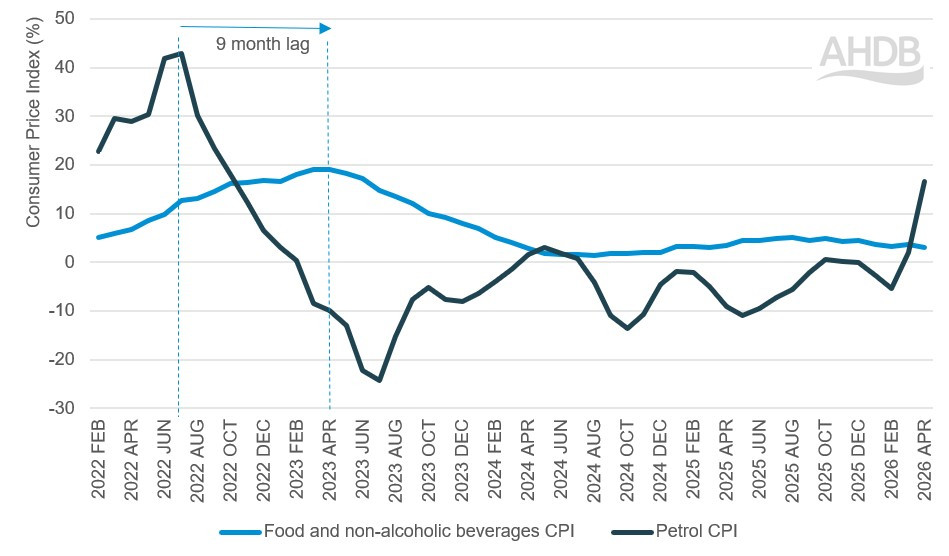
The war in Ukraine led to a surge in energy prices in 2022, with petrol inflation peaking at 43%2. Food inflation peaked around nine months later, reaching 19% in March 20233.

Today, the Middle East conflict has disrupted energy markets again. The Bank of England highlights unstable energy prices as a key risk to inflation4.

Petrol inflation is currently 17% as of April 20262. Food inflation is currently 3%3. If the previous lag is repeated, food inflation could rise again later this year.

The potential return of a strong El Nino, bringing a rise in global temperatures and disrupted global weather patterns is adding further uncertainty5, with concerns focused on the impact on food imports to the UK6.

The Food and Drink Federation is predicting that food inflation will hit 9 to 10% by December 20261.

Figure 1. ONS CPI for petrol, food and non-alcoholic beverages

Graph showing food and petrol inflation from 2022 to 2026

Source: Office for National Statistics

The line chart in Figure 1 shows monthly trends in UK petrol CPI from February 2022 to April 2026 (dark blue line) and UK food and non-alcoholic beverages CPI from February 2022 to April 2026 (light blue line).

Inflation trends vary by category

Beef prices rose sharply in 2025 due to supply constraints, with inflation reaching 27.7% in November 20257.

Higher prices reduced demand, with volumes declining -5.1% through 20258.

Since the start of 2026, deadweight cattle prices have been falling, leading to a softening of beef inflation to 13.2% in April7.

However, average prices on shelf for beef remain 12% up year-on-year for the past 12 weeks, with beef volumes showing a -4% decline9.

Consumers are using a variety of tactics to cope with the rising beef prices, and recent research has highlighted behaviour changes for loyal consumers of beef mince.

Dairy has seen falling retail prices in 2026 for some categories. For example, butter, driven by lower wholesale prices.

Retail prices for cheese and pig meat are also expected to fall in the second half of the year.

See full data for meat and dairy categories

Consumer confidence remains fragile

Cost-of-living concerns have returned to their highest level in the past two years, with 85% of consumers extremely or very concerned10.

  • 31% of shoppers expect to be worse off in six months, mainly due to rising food, energy and petrol/fuel costs11
  • 53% of shoppers think their finances will stay the same or improve in six months, suggesting some households may be unprepared for the potential inflation rises11

How consumers respond to rising prices

Shoppers typically respond to rising prices by:

  • Prioritising essential groceries while spending less on large purchases and holidays
  • Trading down to cheaper options, including switching stores, choosing standard over premium products, buying smaller pack sizes or switching to cheaper proteins
  • Looking for discounts and promotions, although these are less available at the peak of inflation
  • Taking more time to plan, batch cook and freeze meals to stretch budgets and reduce waste
  • Increasing scratch cooking to save money and reduce reliance on ultra-processed foods
  • Eating out less and choosing to eat at home more often

What this means for meat and dairy demand

Consumers will continue to buy cheaper options for everyday use, such as beef mince, pork mince, pork sausages, chicken breasts and Cheddar.

Expensive products like beef steaks and lamb roasting joints are more likely to be reserved for special occasions.

Higher levels of scratch cooking will likely benefit butter, plain yogurt and cream.

Even during inflation, many consumers will still choose healthy, more natural alternatives. This supports demand for primary meat cuts, block butter, whole milk and plain, probiotic or high-protein yogurts.

Products linked to UPFs, such as bacon rashers and flavoured yogurts, will continue to decline.

Some added-value products will continue to grow, including ready-to-cook meat, marinated products, premium private label cheese and premium yogurts. These offer a small indulgence or treat.

Sources:

1Food and Drink Federation, Understanding UK food inflation, April 2026

2Office for National Statistics, CPI Annual Rate for Petrol, February 2022 to April 2026

3Office for National Statistics, CPI Annual Rate for Food and non-alcoholic drinks, February 2022 to April 2026

4Bank of England, Monetary Policy Summary and minutes of the Monetary Policy Committee meeting ending on 18 March 2026

5Met Office, Pacific Ocean warming signals the possible return of a strong El Niño, April 2026

6Energy & Climate Intelligence Unit, El Nino: heat stress risk to British food (rice, coffee and chocolate) grown by foreign farmers

7Office for National Statistics, CPI Annual Rate for Beef and Veal

8Worldpanel by Numerator UK, 52 w/e 28 December 2025

9Worldpanel by Numerator UK, 12 w/e 17 May 2025

10Sparkminds, Ear to the ground, May 2026

11IGD ShopperVista Research, May 2026

Image of staff member Emma Wantling

Emma Wantling

Retail and Consumer Insight Manager

See full bio


Sign up to receive the latest information from AHDB.


While AHDB seeks to ensure that the information contained on this webpage is accurate at the time of publication, no warranty is given in respect of the information and data provided. You are responsible for how you use the information. To the maximum extent permitted by law, AHDB accepts no liability for loss, damage or injury howsoever caused or suffered (including that caused by negligence) directly or indirectly in relation to the information or data provided in this publication.

All intellectual property rights in the information and data on this webpage belong to or are licensed by AHDB. You are authorised to use such information for your internal business purposes only and you must not provide this information to any other third parties, including further publication of the information, or for commercial gain in any way whatsoever without the prior written permission of AHDB for each third party disclosure, publication or commercial arrangement. For more information, please see our Terms of Use and Privacy Notice or contact the Director of Corporate Affairs at info@ahdb.org.uk  © Agriculture and Horticulture Development Board. All rights reserved. 

×