In-home dishes review: Health, value and simplicity are the new drivers

Tuesday, 26 May 2026

Brits consumed 87% of their food and drink occasions in the comfort of their own home last year, according to Worldpanel by Numerator¹. However, the impact of inflation is clear, with this being 970 million fewer occasions than the previous year and with some consumers skipping meals completely. Out-of-home occasions are also struggling as many people are substituting eating out with carried out (i.e. lunchboxes, etc.). With fewer meals being consumed, it is even more integral to ensure red meat and dairy play a clear role when dining at home.

Three key trends are shaping in-home main meals

  • Health remains a strong and growing driver
  • A shift away from pure convenience
  • A renewed focus on scratch cooking driven by affordability needs

These trends are closely linked, with rising costs encouraging consumers to cook more from scratch, which is also perceived as healthier.

So, let’s look at them in a bit more detail and see how they are impacting the in-home usage of red meat and dairy.

What trends are impacting our in-home main meal choices?

  • Last year, for the first time since Covid, we saw a slight decline in the number of consumers choosing meals for speed and ease reasons (although both remain important). This is coupled with a slight increase in time spent preparing our meals, which on average is now 14.8 minutes for lunch and 33.7 minutes for an evening meal¹

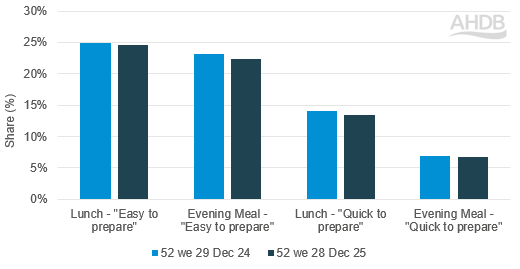
Figure 1. Percentage of total food servings chosen at lunch and evening meals for a specified reason

chart showing share of quick and easy meals 24 vs 25

Figure 1 shows a slight decline in consumers choosing meals for speed and ease reasons at lunch and evening meals in the week ending 28 December 2025 compared to the same week in the previous year. Easy to prepare lunches and evening meals are chosen more often than quick to prepare.

  • While assembled meals (items bought together and served on the same plate) still account for the majority of occasions in home (61.2%), we have seen a rise in scratch cooking. During 2025, 9.7% of lunch occasions (+1.1ppt year-on-year (YOY)) and 20.4% of evening meal occasions (+0.4ppt YOY) were scratch cooked. Its relevance is increasing as scratch typically represents a cost-saving option versus convenience options, being on average 82p cheaper per lunch meal and 58p cheaper per evening meal¹. Affordability is also reflected in meal compositions, with a shift towards fewer ingredients being used, despite ‘ease’ being less of a consideration.              
  • Health as a reason for food choices has continued to grow to one of its highest levels in a decade. We predict health engagement will continue in 2026, bolstering scratch meals further as they are considered the healthiest type of meal. For more information, see our 2026 consumer health predictions

What has been the impact on red meat and dairy?

Cow’s dairy features in 38% of main meals and red meat is not far behind at 26.7%. However, both are down year-on-year (from 38.6% for cow’s dairy and 27% for red meat), driven by both lunch and evening meals¹.

Lunch is still dominated by the classic, convenient sandwich, accounting for 33.4% of occasions last year. However, this has dropped from 34.4% the previous year, negatively impacting the sliced cooked meat (SCM) category, particularly ham, butter, spreads and cheese.

Soups are also seeing a loss at lunch, impacting yogurt and cream. However, meals gaining share at lunch (in order of share growth) include salads, chicken-based meals (driven by primary and processed), jacket potatoes, primary fish-based meals, pastas, Indian and pan-Asian meals.

The growth in salad at lunch is benefiting all proteins, as well as cheese. Both sectors should capitalise on this further through messaging around health and nutrition, which is a key reason consumers choose a salad. For red meat, focus on primary cuts and utilise a convenience message for SCM in salads. For cheese, as well as health, the varieties can offer daily differentiation for salads.

World cuisines may be gaining at lunch, but they are losing share in the evening. Therefore, lunch options must meet the need for a shorter preparation time.

Inspiration should focus on the speed and convenience of primary cuts in simple meals such as a stir fry. Primary pork has already started to grow in this area, so it needs to maintain momentum to stem the declines in other dishes (particularly SCM).

For dairy, the addition of milk or yogurt in dishes such as Italian and Indian elevates the taste experience. This can also be the case for more traditional dishes, for example, the addition of milk in mash potato. Therefore, consumers must be reminded of this benefit at a time when ingredient lists are being cut back.

In the evenings, pasta and chicken-centred meals remain dominant (both hold 12% share of occasions), with the latter growing year-on-year through primary cuts.

Dishes that have also gained share (in order of share growth) include roast dinners, salads, burgers and steaks. As previously mentioned, this is at the expense of world cuisines, which highlights a slight shift towards meat-centred plates.

The growth in roasts is currently benefiting chicken and pork (likely due to price point), leaving beef and lamb joints to justify their price premium through quality and taste messaging.

Beef, despite high inflation, is doing well at the evening meal in burgers and steak as a centrepiece (with the latter being part of +4m occasions in the last year) ¹.

Steak is increasingly being chosen for health, natural and filling reasons. But consider meal pairing inspiration to bolster the healthy plate. For example, steak and chips have declined YOY, but steak and frozen vegetables have gained. This can also encourage the cost conscious.

Dairy is also benefiting from this shift: milk or yogurt as a marinade ingredient for chicken-centred meals (red meat should capitalise on this too) and cheese on burgers.

Again, cheese varieties can play a key role here, offering a chance for consumers to differentiate a meal by changing one simple element.

While classic Cheddar is still key, red Leicester is what has seen growth on burgers. The same can be said for other growing cheese dishes such as jacket potatoes and omelettes.

Recommendations and opportunities for red meat and dairy

  • Affordability is a key consideration for consumers currently. Consider how to play on value for money, whether that be through price or benefit messaging, e.g. quality and filling
  • Promote the health benefits of red meat and dairy by communicating a balanced plate, naturalness and nutritional benefits. See our latest marketing campaigns for assets
  • Scratch cooking has a good synergy with primary red meat and dairy. Ensure their presence in scratch cooking inspiration
  • Despite declining slightly, speed, ease and convenience are still extremely important. For recipe inspiration, take away the effort – showcase recipes with fewer steps and ingredients
  • Great taste still ultimately drives meal choice and so should remain at the forefront of communication. For both red meat and dairy, its flavour elevates a dish experience and consumers need to be reminded of this

¹ Worldpanel Take-Home Usage by Numerator UK, 52 w/e 28 December 2025

Image of staff member Kim Heath

Kim Heath

Lead Retail Insight Manager

See full bio


Sign up to receive the latest information from AHDB.


While AHDB seeks to ensure that the information contained on this webpage is accurate at the time of publication, no warranty is given in respect of the information and data provided. You are responsible for how you use the information. To the maximum extent permitted by law, AHDB accepts no liability for loss, damage or injury howsoever caused or suffered (including that caused by negligence) directly or indirectly in relation to the information or data provided in this publication.

All intellectual property rights in the information and data on this webpage belong to or are licensed by AHDB. You are authorised to use such information for your internal business purposes only and you must not provide this information to any other third parties, including further publication of the information, or for commercial gain in any way whatsoever without the prior written permission of AHDB for each third party disclosure, publication or commercial arrangement. For more information, please see our Terms of Use and Privacy Notice or contact the Director of Corporate Affairs at info@ahdb.org.uk  © Agriculture and Horticulture Development Board. All rights reserved. 

×