How have in-home eating habits changed over the last decade?

Thursday, 9 July 2026

In 2017, headlines warned of big changes in the way we shop, eat and even produce food. A wave of innovation was just round the corner, and we were promised checkout-free shops, edible insects and lab-grown food on our shelves.
But in 2026, we can see that things haven’t turned out that way. That said, the industry has still seen plenty of change, driven by major global and local shifts. Our lifestyles have evolved, and so have our food habits, often in ways we might not have expected.

Key points

  • Eating habits have shifted, not transformed. Consumers are eating more meals at home post-Covid; these are simpler and have more of a global influence, while sandwiches remain a staple at lunchtime (often featuring red meat)
  • Eating at home now means more to the consumer. It’s not just about convenience anymore, as meals are increasingly used to relax, connect and treat, with the rise of the ‘big night in'
  • Health is becoming more important, and even with lower consumer confidence, shoppers are prioritising healthier choices and looking for added benefits and less processed foods

The world in 2017 vs 2026

The last decade has brought major changes to the food and drink landscape. New regulations have restricted the promotion, placement and advertising of foods and drinks high in fat, salt or sugar, while the growth of digital channels has transformed how consumers shop

Online grocery shopping has become more common, and platforms such as TikTok Shop now allow businesses to sell directly to consumers.

Eating habits have changed too, driven by shifting lifestyles and the lasting impact of the Covid-19 pandemic. As more people have worked from home, routines around cooking and eating have evolved.

This has contributed to two key trends: a greater reliance on convenient options such as ready meals and cook-at-home pizzas, alongside a growing desire to make meals at home more meaningful occasions.¹

In-home lunches

In-home meal occasions in 2026 have grown by an extra 3.1bn compared to 2017. This includes an extra 1.1bn in-home lunches.

The meals we are having for lunch have changed, with more hot, simple but filling dishes, such as noodles, pasta, pies and pasties.

This creates a key opportunity for meat and dairy, where these dishes can often be elevated by meat, fish and poultry (MFP) and dairy products, such as adding cheese to a Bolognese or steak strips to a stir fry.

Despite decline, sandwiches remain the top choice for lunchtime meals. This is good news for meat and dairy, as 41.3% of sandwiches feature some form of red meat, 38% contain cheese and 21% contain butter.

Importance of health

Another key change we can see in our everyday lives is the growing importance of health for many consumers. Health is growing in importance and there’s a renewed desire for products with added goodness and benefits.  

One particularly interesting trend has arisen: health in being prioritised by consumers despite the decreasing consumer confidence. This means despite rising uncertainty and anxiety over the world and economy, shoppers are still prioritising health.

According to Worldpanel by Numerator Usage, ‘added goodness’ accounts for 24.5% of our servings, a +0.7ppt increase from 2017, as consumers are looking for more natural health benefits at lunch and evening meals.

With the rise in GLP-1 medication, and trends towards cleaner and less processed foods, this creates key opportunities for meat and dairy to promote themselves as natural, solid sources of single-ingredient proteins with necessary vitamins.

‘Big nights in’

While in-home occasions have settled since their pandemic peak, they remain higher than before, and crucially, they now serve a different purpose. Eating at home is no longer just about convenience or routine; it’s about creating moments to relax, connect and enjoy food with family and friends.

This is reflected in the continued rise of the ‘big night in’, where occasions are less about speed and more about enjoyment, with meals chosen because they feel like a reward or a break from the everyday.

At the same time, higher out-of-home costs have encouraged people to recreate these experiences at home, reinforcing the idea that eating in is not a compromise but an experience in its own right.1 This is also supported by AHDB/YouGov Tracker2 data showing that of those consumers that are planning to eat out less, 89% do so for cost reasons.

These occasions create opportunities for meat and dairy to play a bigger role in meals that are about enjoyment, treating ourselves and spending time together.

Products that help consumers create a restaurant-style experience at home, such as premium cuts or indulgent dairy products, may be well placed to benefit from the growing big night in trend.

What has remained the same?

These changes reflect more of an evolution, as opposed to a revolution, in the way we eat and shop.

Many of the above habits appear to be evolutions of behaviours we could already see in 2017, and many other habits remain the same from 2017, with small changes here and there to adapt to external context.

For example, shopping habits have largely returned to pre-pandemic levels with the only real change stemming from price rises driven by inflation.

Similarly, while lunch-time meal occasions in-home might have increased in the last decade, the number of main meals and snacks consumed in-home or carried out remains on par with levels seen in 2017.

Within these meals and snacks, our love of meat and cow’s dairy has remained integral to our diets. In fact, around half of our main meals contain MFP, and over 40% contain cow’s dairy, and this has been true for every year from 2017 to 2026.


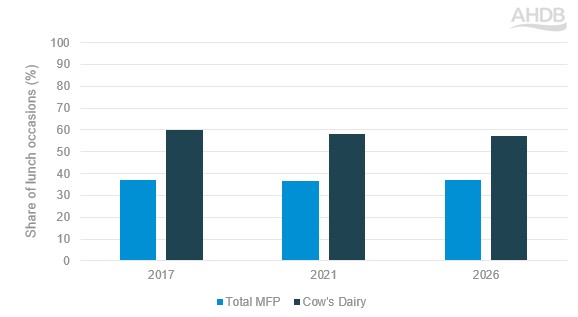
Figure 1. Share of lunch occasions (%) by category, 2017–2026

Bar chart showing lunch occasions containing MFP and cow’s dairy, 2017–2026.

Source: Worldpanel by Numerator Usage, 52 w/e February 2026 versus 52 w/e February 2021 versus 52 w/e February 2017

Figure 1 shows the share of lunch occasions for total MFP and cow’s dairy in 2017, 2021 and 2026. Total MFP remains stable at around 37%, rising slightly from 37.1% in 2017 to 37.2% in 2026. Cow’s dairy has a much higher share of lunch occasions but declines from 60.2% to 57.0% over the same period.


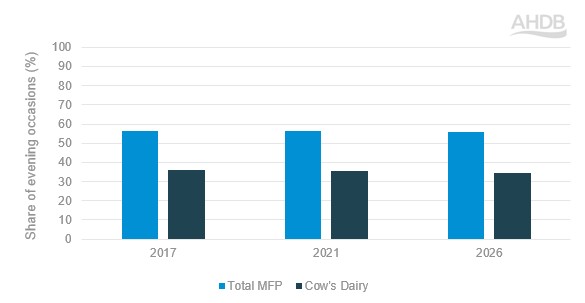
Figure 2. Share of evening occasions (%) by category, 2017–2026

Bar chart showing evening occasions containing MFP and cow’s dairy, 2017–2026.

Source: Worldpanel by Numerator Usage, 52 w/e February 2026 versus 52 w/e February 2021 versus 52 w/e February 2017

Figure 2 shows the share of evening occasions for total MFP and cow’s dairy in 2017, 2021 and 2026. Total MFP remains broadly stable, declining slightly from 56.5% to 55.7%. Cow’s dairy shows a larger decline, falling from 36.2% to 34.4% over the same period.

What might the future hold?

No one can be sure of what might happen in the next 10 years, but we can make some educated predictions. AHDB expects to see:

  • A continuation in the importance of work-from-home lunches
  • The role of health will remain relevant and impactful in our shopping and eating habits, regardless of price changes
  • The importance of simple and quick meals will continue to grow
  • A rise in ‘cuisine’ eating, such as Asian and Italian dishes

Looking back, the story of the last decade is one of evolution, rather than revolution. As consumers place more value on convenience, health and enjoying meals at home, there are opportunities for red meat and dairy to highlight the taste and natural health benefits to meet a range of needs and occasions.

Whether it’s a quick lunch, a nutritious meal or a big night in, all remain well positioned to play an important role in the British diet.


1 Worldpanel by Numerator Usage, 52 w/e February 2026 versus 52 w/e February 2017

2 AHDB/YouGov Consumer Tracker, May 2026

Image of staff member Lucy Rabjohn

Lucy Rabjohn

Retail and Consumer Insight Analyst

See full bio


Sign up to receive the latest information from AHDB.


While AHDB seeks to ensure that the information contained on this webpage is accurate at the time of publication, no warranty is given in respect of the information and data provided. You are responsible for how you use the information. To the maximum extent permitted by law, AHDB accepts no liability for loss, damage or injury howsoever caused or suffered (including that caused by negligence) directly or indirectly in relation to the information or data provided in this publication.

All intellectual property rights in the information and data on this webpage belong to or are licensed by AHDB. You are authorised to use such information for your internal business purposes only and you must not provide this information to any other third parties, including further publication of the information, or for commercial gain in any way whatsoever without the prior written permission of AHDB for each third party disclosure, publication or commercial arrangement. For more information, please see our Terms of Use and Privacy Notice or contact the Director of Corporate Affairs at info@ahdb.org.uk  © Agriculture and Horticulture Development Board. All rights reserved. 

×