A leaner market: GLP-1 weight loss drugs and the future of red meat demand

Tuesday, 5 May 2026

As more people begin to take GLP-1 weight loss drugs, what influence could this have on the red meat industry?
  • GLP-1 weight loss drugs, originally designed to treat type 2 diabetes and obesity, are becoming more of a household name and are making headlines for general weight loss support

  • GLP-1 medications decrease appetite – users typically eat smaller portions, eat less often and change what they eat, creating a potential risk for red meat consumption

  • Users have reported eating fewer takeaways and foods that are high in fat and sugar; the largest reductions are in ultra-processed calorie-dense foods, and there is a shift towards healthier, more natural options

What are GLP-1 drugs?

GLP-1 medication works by releasing a naturally occurring hormone to help regulate blood sugar, appetite, digestion and other metabolic functions. This results in a decrease in appetite and changes in taste, and causes users to change the way they eat.

GLP-1 users are advised to follow a diet that focuses on nutrient-dense, lower-fat and protein-rich food, to support muscle maintenance and satiety.

GLP-1 usage in the UK

In 2023/24, over 64% of adults in England were estimated to be overweight or living with obesity (GOV.UK Obesity profile, May 2025), showing there is a clear market for weight loss drugs.

In January 2026, an IGD ShopperVista report found that 5.2% of respondents say they have personally used weight loss drugs, an increase of 1% from September 2025. 

Furthermore, according to the AHDB/YouGov Tracker February 2026, of those consumers taking weight loss medication, 39% are taking them due to a weight-related medical condition (e.g. diabetes, obesity, high body mass index (BMI) score), while 48% are taking them for personal weight loss reasons.

GLP-1 usage is projected to increase in the UK. According to YouGov Health and Wellbeing Tracker March 2026, 14% of Brits would consider using weight loss drugs in the future which is equivalent to 7.6 million people. Nearly 72% of people in the survey believe that weight loss drugs are more effective than traditional dieting.

What could this mean for demand of red meat?

Users of GLP-1 weight loss drugs need to adapt their diet to consume smaller but more nutrient-dense meals, with some users reporting a shift towards more supplements and protein-based products (YouGov Health and Wellbeing Tracker, March 2026).

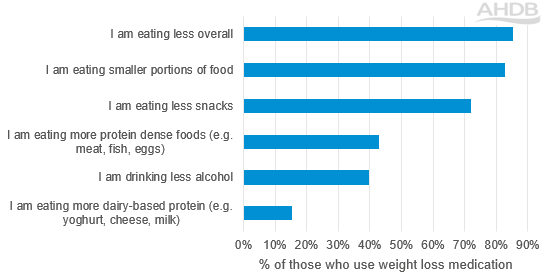
The YouGov/AHDB tracker February 2026 found that, of those people who are taking GLP-1s, 85% report eating less food overall while 43% report eating more protein-dense foods such as meat and fish.

Figure 1. In which ways, if any, does taking a GLP-1 medication influence the food or drink you consume?

GLP1 chart showing what changes have occurred in diet

Source: YouGov/AHDB Tracker, February 2026

Figure 1 shows the percentage of GLP‑1 users reducing consumption. The most common changes are eating less overall (around 30%), eating smaller portions (around 30%), and eating fewer snacks (around 30%). Fewer people report increasing dairy‑based protein (around 15%).

According to a large US food demand survey (GLP-1use and protein demand, January 2026, Science Direct) looking into food-buying habits of GLP-1 users in January 2026, while users reported eating less food overall, they were willing to pay more for protein-rich, high-quality meat and seafood. This could lead to consumers buying reduced quantities of meat overall, but splurging on higher-cost, high-quality, more premium cuts of meat when they do buy it.

GLP-1 users have also reported eating fewer takeaways and foods that are high in fat and sugar, with the largest reductions seen in ultra-processed, calorie-dense foods, showing a shift towards healthier, more natural options. This creates a potential risk for all processed meat, and the out-of-home market could experience a decline in consumption.

What opportunities are available for red meat?

Protein is currently in the spotlight as a growing health trend, especially for males under 34 years old. High protein diets are also appealing to GLP-1 users as they support weight loss, muscle maintenance and metabolic health.

Lean cuts of red meat, such as steaks and pork tenderloins, are ideal for users of GLP-1, so there is an opportunity for consumption of lean cuts and premium quality products to increase.

As the number of GLP-1 users increases, we are seeing that the food industry is beginning to target them in their marketing, advertising and product launches. A number of major retailers launched smaller portion nutrient-dense ranges in early 2026, which provide enough protein, fibre, vitamins and minerals to support those consumers with smaller appetites.

In addition, findings from the US study show that GLP-1 users consistently showed a higher willingness to pay for meat and seafood, while results for plant-based alternatives were inconsistent or non-existent.

We have seen the general health trend of consumers turning away from ultra-processed foods (UPFs). This could further exaggerate the decline of UPFs and the desire for more natural high protein products.

Summary

GLP-1 drugs may not have been around in the weight loss world for long, but they have certainly made a big splash in the food industry.

The decreased overall food consumption in GLP-1users poses a risk to all sectors, including red meat. However, the high protein and micronutrient content of red meat positions it well as users of GLP-1 search for high protein, nutrient-dense offerings. Messaging that focuses on high protein and lean meat will appeal to these consumers.

Providing nutritionally complete, convenient, pre-packed options with attention to portion sizes will be key to winning these consumers.

Image of staff member Hannah McLoughlin

Hannah McLoughlin

Trainee Analyst

See full bio

Image of staff member Vanessa Adamson

Vanessa Adamson

Retail and Consumer Insight Manager

See full bio


Sign up to receive the latest information from AHDB.


While AHDB seeks to ensure that the information contained on this webpage is accurate at the time of publication, no warranty is given in respect of the information and data provided. You are responsible for how you use the information. To the maximum extent permitted by law, AHDB accepts no liability for loss, damage or injury howsoever caused or suffered (including that caused by negligence) directly or indirectly in relation to the information or data provided in this publication.

All intellectual property rights in the information and data on this webpage belong to or are licensed by AHDB. You are authorised to use such information for your internal business purposes only and you must not provide this information to any other third parties, including further publication of the information, or for commercial gain in any way whatsoever without the prior written permission of AHDB for each third party disclosure, publication or commercial arrangement. For more information, please see our Terms of Use and Privacy Notice or contact the Director of Corporate Affairs at info@ahdb.org.uk  © Agriculture and Horticulture Development Board. All rights reserved. 

×